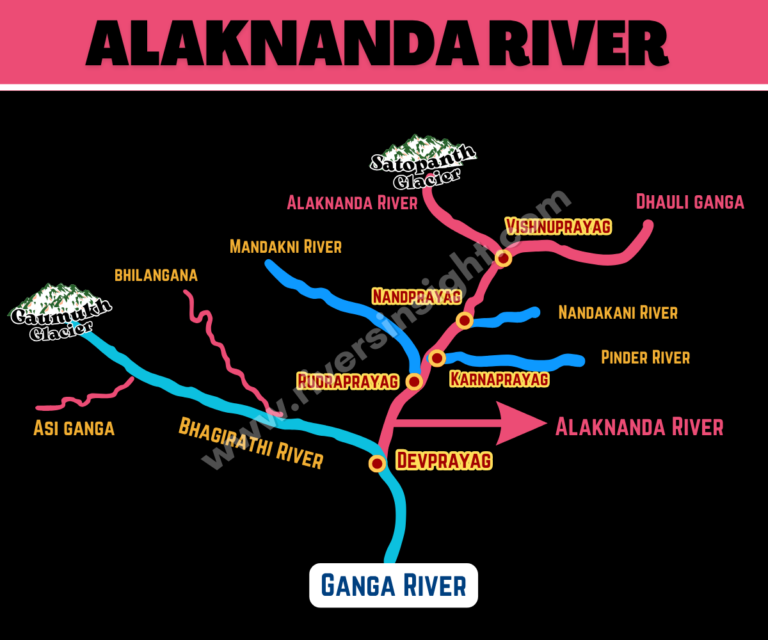
Alaknanda River: Map & Origin with Key Facts
The Alaknanda River is a major source stream of the Ganga, flowing through the Garhwal Himalayas in Uttarakhand. It originates
Read More
Himalayan Rivers are the major rivers that originate from the Himalayan mountain range. These rivers are snow-fed, flow throughout the year, and travel across long distances. Some of the most important rivers in this group include the Ganga, Yamuna, Brahmaputra, Sutlej, and Indus. These rivers play a big role in shaping the geography and water system of North India. In this section, we cover all the major Himalayan rivers with simple explanations, origin points, routes, tributaries, maps, and interesting facts.
The Alaknanda River is a major source stream of the Ganga, flowing through the Garhwal Himalayas in Uttarakhand. It originates
Read More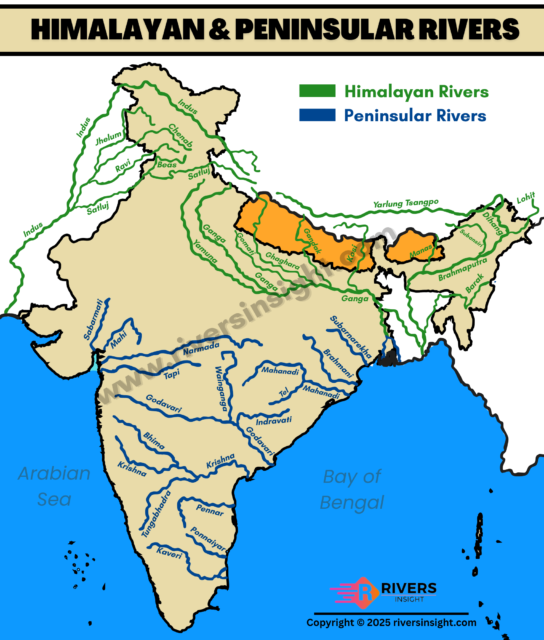
The difference between Himalayan and Peninsular rivers is one of the most commonly asked questions in Indian geography. Indian rivers
Read More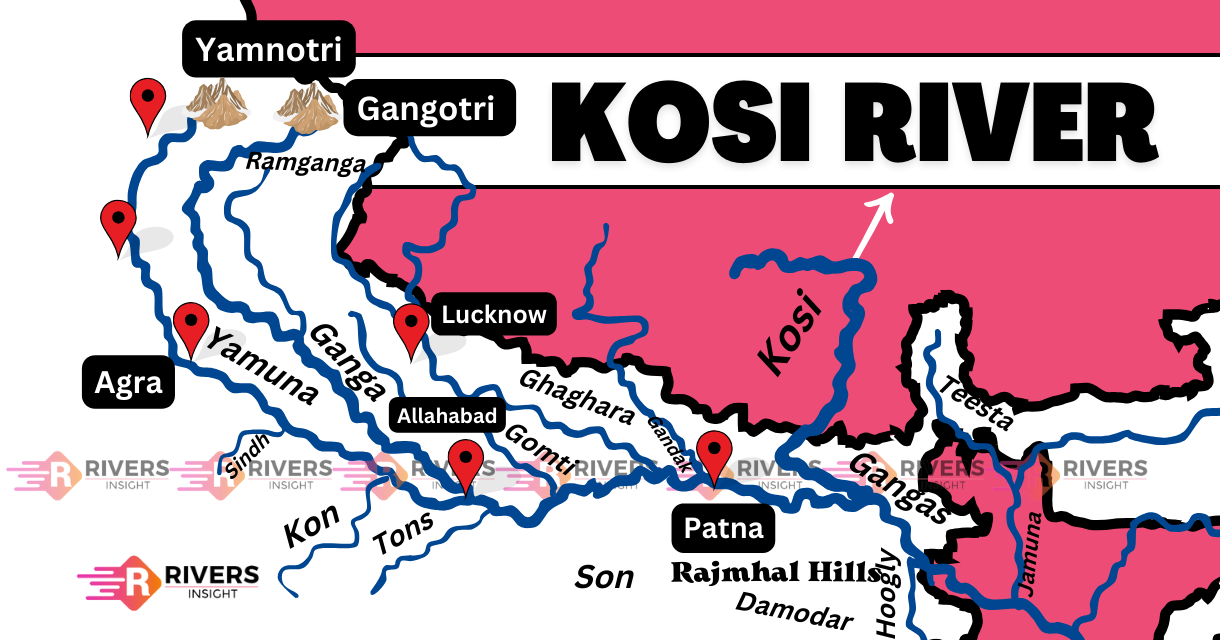
The Kosi River originates from the Himalayan slopes of Tibet and flows onward through China, Nepal, and India as a
Read More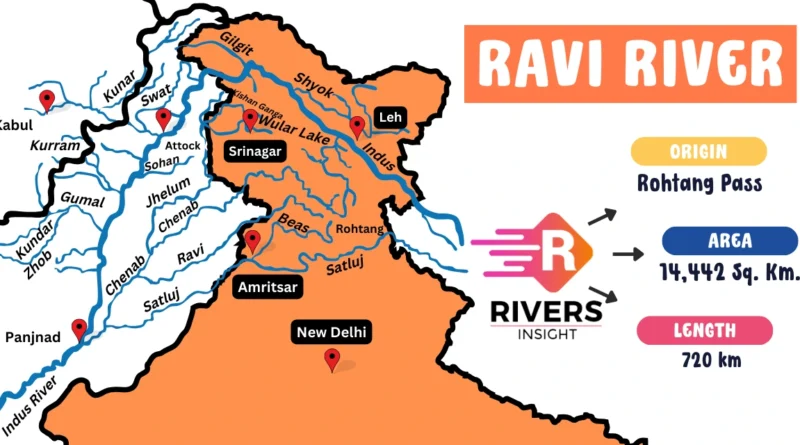
The Ravi River is one of the five major rivers of the Punjab region, originating from the Lahul range in
Read More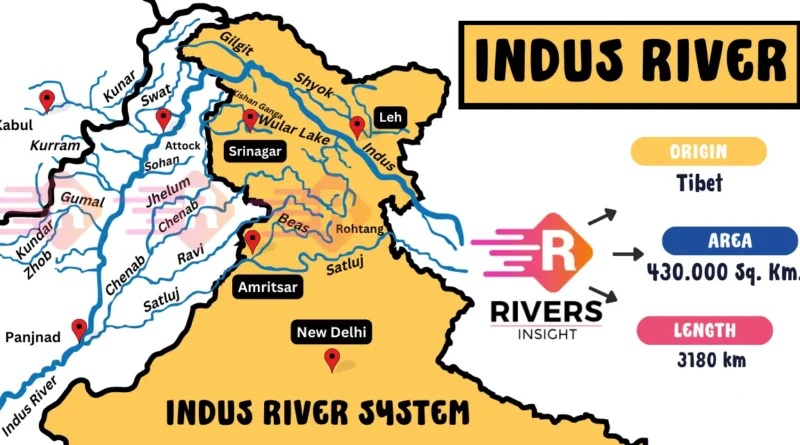
Indus River is also known as the Sindhu River in ancient times. It is one of the longest rivers in
Read More
The Ghaghara River, known as the Karnali River in Nepal and Mapcha Tsangpo in Tibet, is a major perennial river
Read More
What is an Antecedent River? An antecedent river is a river that maintains its original course despite tectonic uplift or
Read More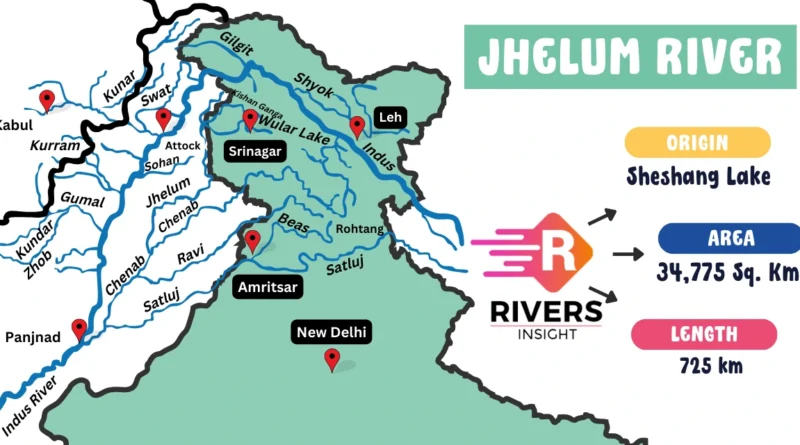
The Jhelum River originates from the Verinag Spring in Jammu and Kashmir, India. It flows approximately 725 kilometers through the
Read More
Manas River is a transboundary river that flows from the glacier-fed peaks of Tibet through eastern Bhutan and into northeast
Read More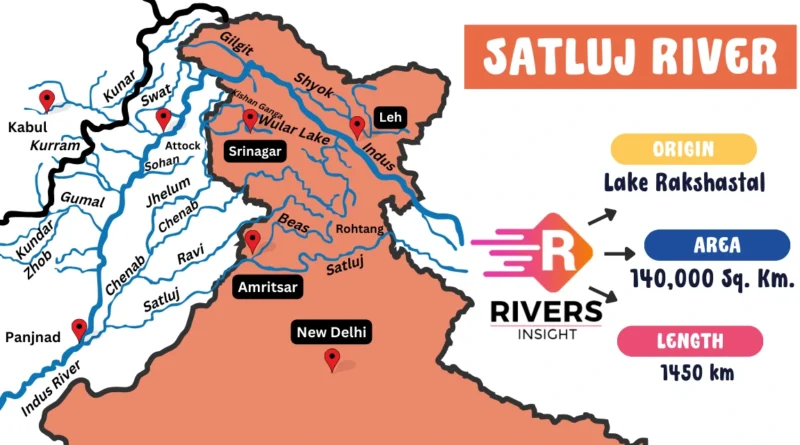
The Satluj River, coursing through South Asia, notably China, India, Nepal, and Pakistan, has been a pivotal force in shaping
Read More