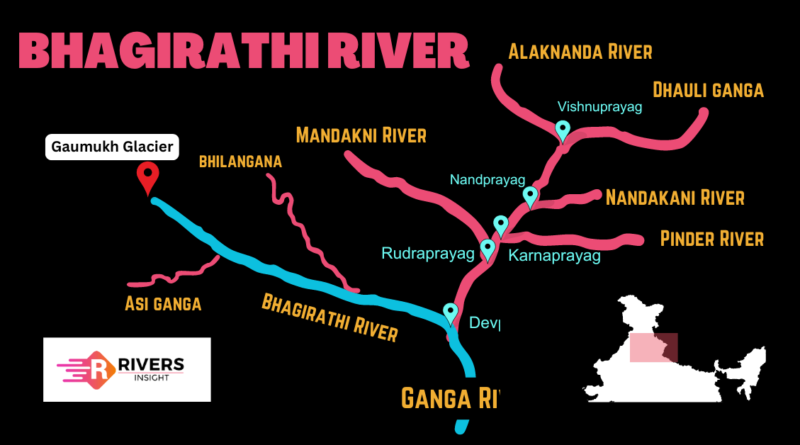
Bhagirathi River: Origin, Map, Tributaries & Confluence
Bhagirathi River is a significant tributary of the Ganges River in India, originating from the Himalayas and flowing through Uttarakhand.
Read More
Himalayan Rivers are the major rivers that originate from the Himalayan mountain range. These rivers are snow-fed, flow throughout the year, and travel across long distances. Some of the most important rivers in this group include the Ganga, Yamuna, Brahmaputra, Sutlej, and Indus. These rivers play a big role in shaping the geography and water system of North India. In this section, we cover all the major Himalayan rivers with simple explanations, origin points, routes, tributaries, maps, and interesting facts.
Bhagirathi River is a significant tributary of the Ganges River in India, originating from the Himalayas and flowing through Uttarakhand.
Read More
India is home to a vast network of Himalayan and Peninsular rivers, many of which rank among the most significant
Read More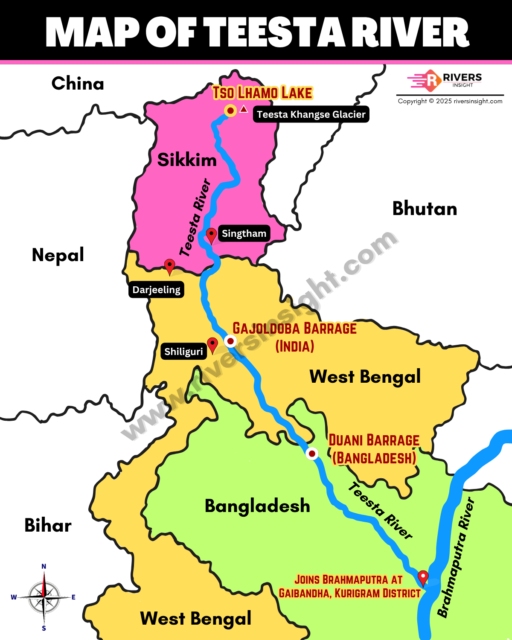
Teesta River is a major river in eastern India and Bangladesh and an important tributary of the Brahmaputra River. It originates in
Read More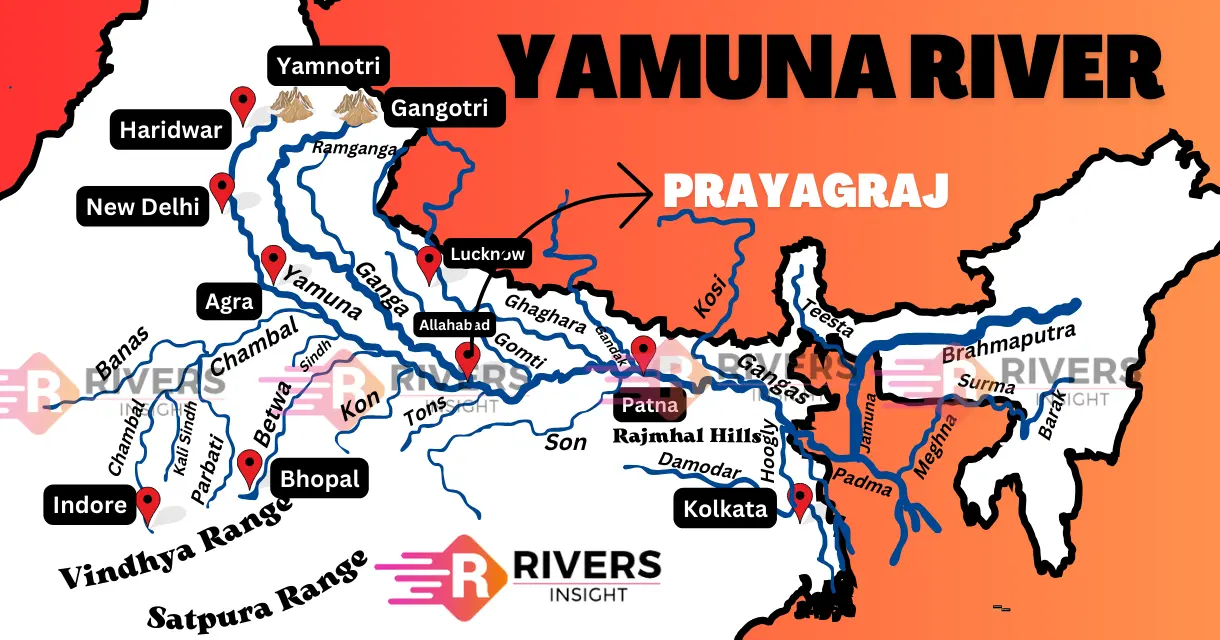
The Yamuna River is a major river in India and is a tributary of the Ganga River. It starts from
Read More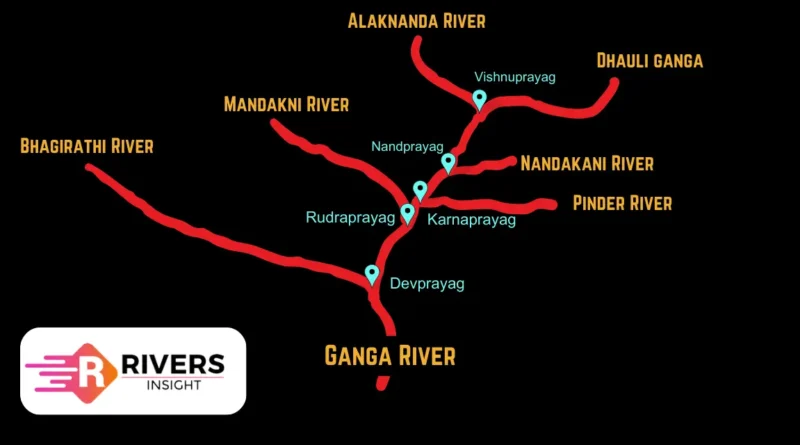
Mandakini River originates from the Chorabari Glacier near Kedarnath in Uttarakhand, India. It is a glacier-fed Himalayan river in the
Read More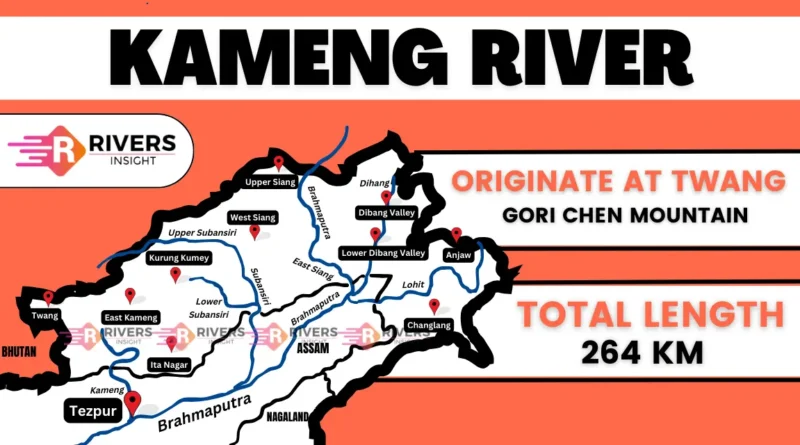
Kameng River is an important tributary of the Brahmaputra River, flowing through Arunachal Pradesh and Assam. It originates from a
Read More
Gomti River is a major perennial river flowing entirely through Uttar Pradesh, with a total length of about 940 km.
Read More
Gandak River is one of the major rivers of North India and a significant left-bank tributary of the Ganga River.
Read More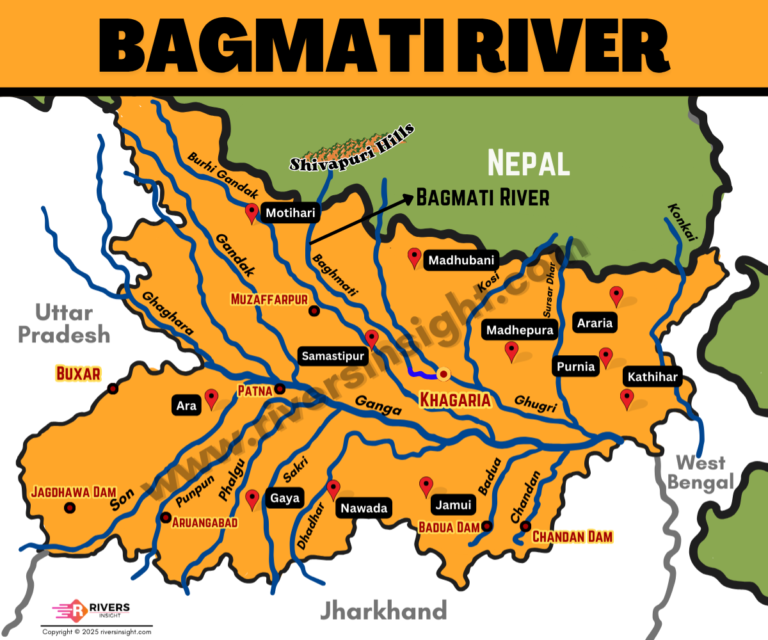
Bagmati River flows from Nepal into North Bihar, with a total length of about 360 km. It lies between the
Read More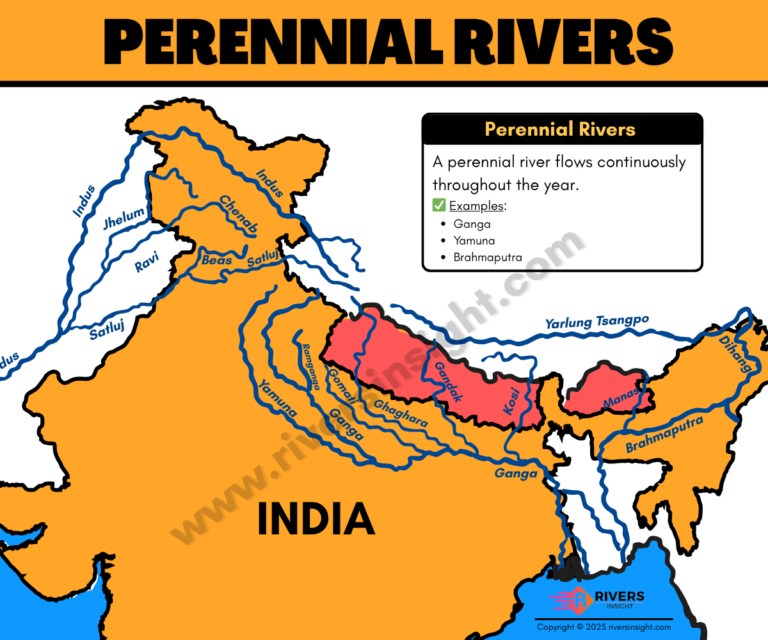
What is a Perennial River? A perennial river is a river that flows throughout the year, regardless of the season.
Read More