Loktak Lake (Manipur): Phumdis & Islands | Features
Loktak Lake is the largest freshwater lake in Northeast India, located in the state of Manipur. It is famous for its unique floating islands called phumdis, which make it one of the most distinctive lakes in the world. The lake can be easily located on the map of India in the northeastern region.
Table of Contents
Location, Rivers & Physical Features of Loktak Lake
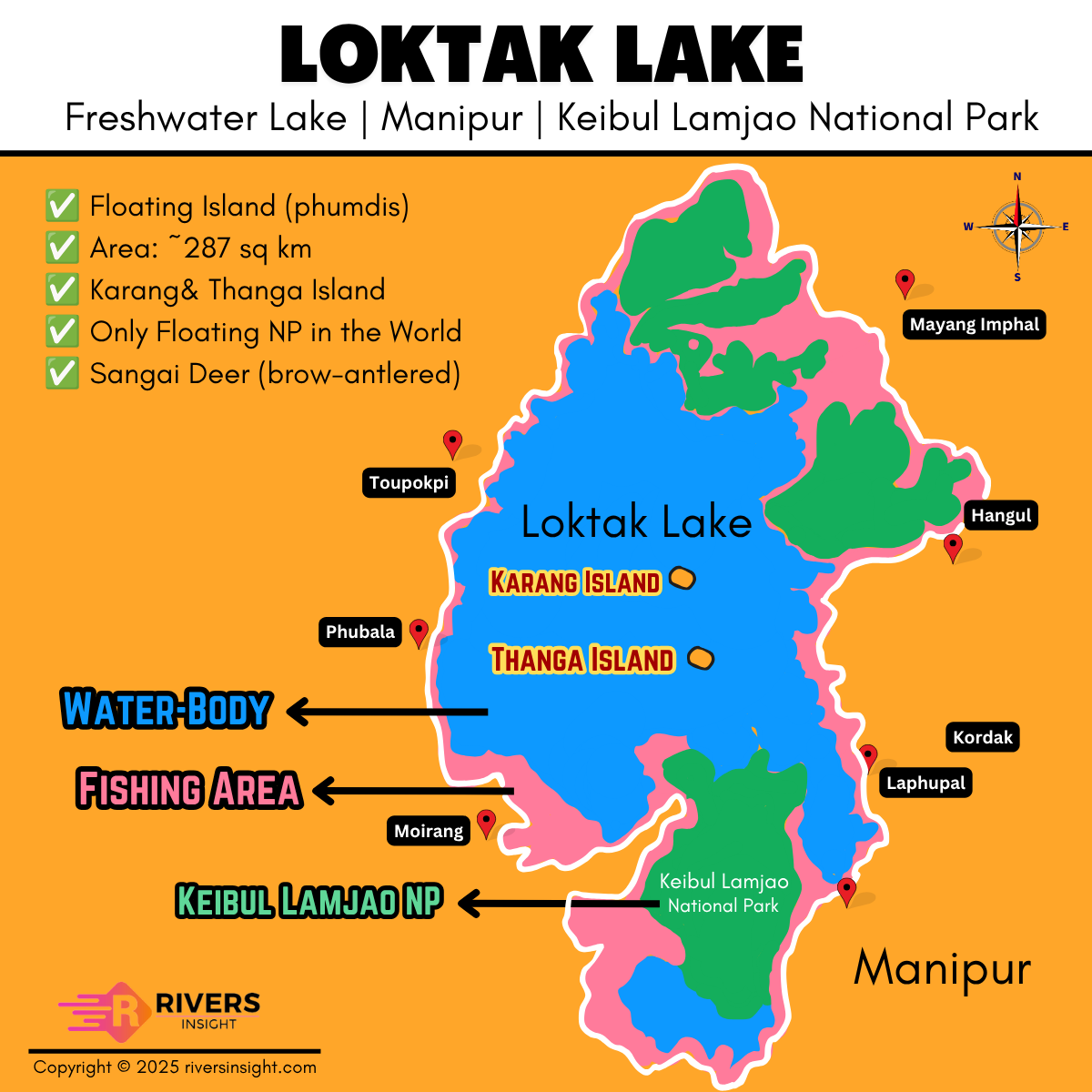
Loktak Lake is situated in the Bishnupur district of Manipur, near Imphal, in a valley surrounded by hills of Northeast India, like the Patkai Range. These hills are part of the eastern extension of the Himalayan system, making the lake an important geographical feature.
It covers an area of about 287 sq km, although its size varies with seasonal rainfall. It is fed by several rivers and streams, making it a dynamic freshwater ecosystem.
Rivers in Loktak
Nine rivers drain into Loktak Lake:
- Khuga
- Thongjaorok
- Awang Khujairok
- Nambol
- Nambul
- Imphal
- Kongba
- Iril
- Thoubal
Phumdis & Keibul Lamjao National Park
The most remarkable feature of Loktak Lake is the presence of phumdis (floating islands), which are floating masses of vegetation, soil, and organic matter. These phumdis vary in size and thickness and even support human habitation and fishing activities.
Additionally, there are several small islands present in the lake, such as:
- Thanga Island
- Karang Island
A part of the lake forms the Keibul Lamjao National Park, which is globally unique as the only floating national park in the world. It is home to the rare Sangai deer (brow-antlered deer), along with other species like Sambhar, barking deer, and Indian python.
The lake supports rich biodiversity, including:
- Around 233 aquatic plant species
- About 57 waterbird species
- 28 migratory waterfowl species
- More than 400 animal species
Ramsar Status & Importance
Loktak Lake was designated as a Ramsar Wetland Site in 1990, recognizing its international ecological importance. Due to environmental concerns, it was also included in the Montreux Record in 1993, which lists threatened wetlands requiring conservation.