Yamuna River System | Map, Origin, Dams & Tributaries
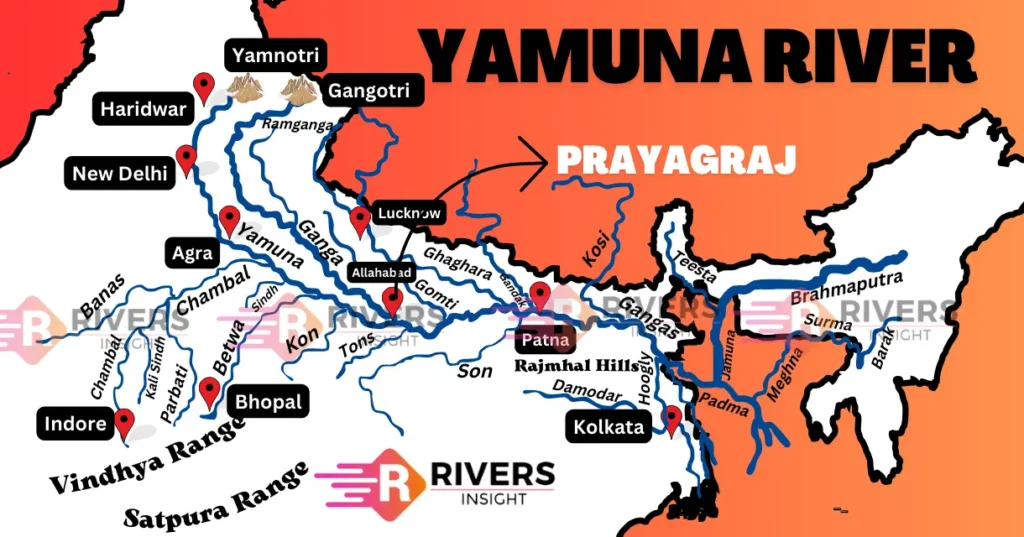
The Yamuna River is a major river in India and is a tributary of the Ganga River. It starts from the Yamunotri Glacier in the Himalayas and flows about 1,376 kilometers through the northern plains of India before joining the Ganges River at Allahabad.
In this article, you will learn everything about the Yamuna River, including its origin, route, length, the states it flows through, and its major tributaries. We will also cover important cities along the river, key dams and barrages, and the current environmental challenges affecting it.
| River | Yamuna River |
| Origin | Yamunotri Glacier |
| Length | 1376 km |
| Join Ganga at | Allahabad |
Table of Contents
Geographical Features of the Yamuna River System
- Originates from the Yamunotri Glacier in Uttarakhand, India.
- Flows through multiple states: Uttarakhand, Himachal Pradesh, Haryana, Delhi, and Uttar Pradesh.
- Spans approximately 1,376 kilometers (855 miles) in length.
- Creates a broad floodplain upon entering the North Indian Plains, characterized by fertile alluvial soil.
- Exhibits varying widths along its course, featuring narrow stretches and wider sections.
- Tributaries include the Tons River, the Hindon River, and the Chambal River.
- Influences the cultural and historical heritage of cities along its banks, such as Delhi, Agra, and Mathura.
Origin & Course of Yamuna River
Yamuna River begins its journey at the Yamunotri Glacier, nestled in the lower Himalayas at around 6,387 meters above sea level. This glacier, located in Uttarakhand, is where the Yamuna originates.
As it flows downstream, the river passes through several states, including Uttarakhand, Himachal Pradesh, Haryana, Delhi, and Uttar Pradesh. It travels approximately 1,376 kilometers (855 miles) before reaching its confluence with the Ganges River in Prayagraj (formerly Allahabad). This merging point is highly revered in Indian culture as it signifies the meeting of two sacred rivers.
The Yamuna River flows near many important cities and landmarks, each adding to its cultural importance:
- Yamunotri
- Delhi
- Agra
- Mathura
- Haridwar
- Vrindavan
- Allahabad (Prayagraj)
- Etawah
- Noida
- Faridabad
- Hathras
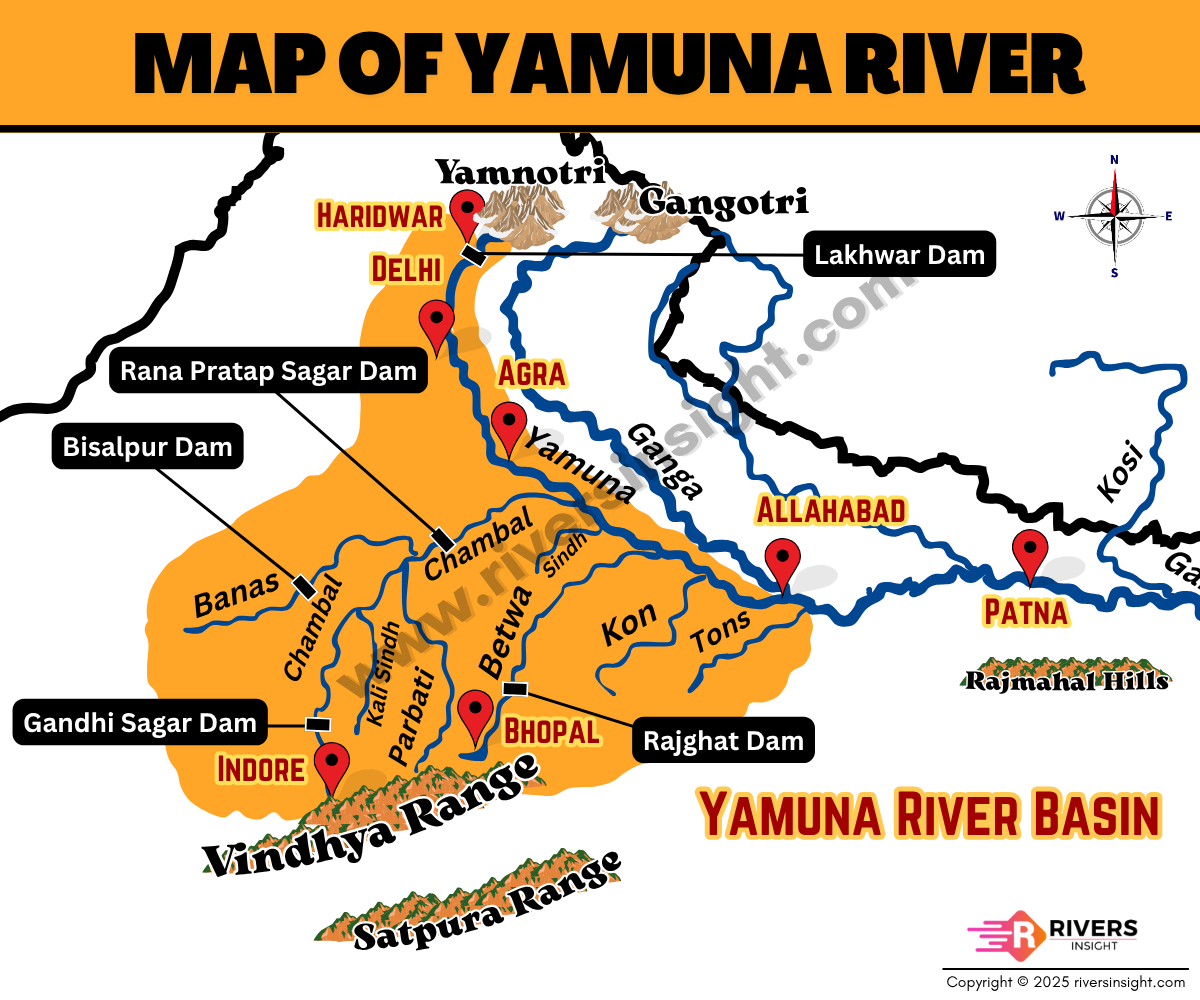
Route Map of Yamuna River (Start to End)
Yamuna flows from the Himalayas to the plains and finally merges with the Ganga.
Flow sequence:
- Confluence at Prayagraj
- Yamunotri (origin)
- Uttarakhand → Himachal Pradesh → Haryana
- Delhi → Uttar Pradesh
Tributaries of Yamuna
The following are the major Tributaries of the Yamuna River:
- Chambal River
- Sindh River
- Betwa River
- Hindon River
- Ken River
- Tons River
| Tributary | Origin | States Covered | Length |
|---|---|---|---|
| Chambal River | Near Mhow, Madhya Pradesh | Madhya Pradesh, Rajasthan | Approx. 1024 km |
| Sindh River | Malwa Plateau, Madhya Pradesh | Madhya Pradesh, UP, Rajasthan | Approx. 470 km |
| Betwa River | Near Bhopal, Madhya Pradesh | Madhya Pradesh, Uttar Pradesh | Approx. 590 km |
| Hindon River | Saharanpur district, Uttarakhand | Uttarakhand, UP, Haryana | Approx. 400 km |
| Ken River | Near Village Ahirgawan, MP | Madhya Pradesh, Uttar Pradesh | Approx. 427 km |
| Tons River | Tons Glacier, Uttarakhand | Uttarakhand, Himachal Pradesh | Approx. 322 km |
Chambal River
Originating from the Vindhya Range near Mhow in Madhya Pradesh, the Chambal River meanders through Madhya Pradesh and Rajasthan, covering a distance of approximately 1024 kilometers. It boasts a rich biodiversity and is home to the National Chambal Sanctuary, a haven for endangered species. The Chambal Valley’s extensive ravines create a distinct landscape, making it a captivating destination for nature enthusiasts.
Sindh River
Rising from the Malwa Plateau in Madhya Pradesh, the Sindh River traverses Madhya Pradesh, Uttar Pradesh, and Rajasthan over a length of approximately 470 kilometers. It supports agriculture through irrigation and hosts tributaries like the Parwan River and Kali Sindh River. The Sindh River basin sustains diverse flora and fauna, contributing to the region’s ecological balance.
Betwa River
Emerging from the Vindhya Range near Bhopal, the Betwa River flows through Madhya Pradesh and Uttar Pradesh, spanning around 590 kilometers. Its picturesque landscapes, including hills, forests, and ravines, attract nature lovers. The Rajghat Dam harnesses its waters for irrigation and hydropower generation, while the Betwa Wildlife Sanctuary safeguards its rich biodiversity.
Hindon River
Originating from the Saharanpur district in Uttarakhand, the Hindon River meanders through Uttarakhand, Uttar Pradesh, and Haryana before merging with the Yamuna River near Ghaziabad. With a length of approximately 400 kilometers, it sustains avian species and serves as a vital resource for local communities. Conservation efforts aim to restore its ecological health and promote sustainable practices.
Ken River
Beginning its journey near Village Ahirgawan in Madhya Pradesh, the Ken River flows through Madhya Pradesh and Uttar Pradesh, spanning approximately 427 kilometers. Renowned for its scenic beauty, the Ken River passes through the spectacular Ken River Gorge, offering mesmerizing vistas near the Panna National Park. Its tributaries, including the Sonar River and Simiri River, contribute to its pristine surroundings.
Tons River
Originating from the Tons Glacier in Uttarakhand, the Tons River meanders through Uttarakhand and Himachal Pradesh, stretching over approximately 322 kilometers. Its rugged landscapes, adorned with deep gorges, dense forests, and remote valleys, showcase nature’s grandeur. Tributaries like the Yamuna River and Supin River augment its flow, ensuring its significance in the region’s ecosystem.
Dams on the Yamuna River
- Okhla Barrage
- Lakhwar Dam
- Hathnikund Barrage
- Tehri Dam
- Wazirabad Barrage
- Kishau Dam (proposed)
- Tajewala Barrage
- Vishnuprayag Barrage
- Gokul Barrage
- Renuka Dam (proposed)
Pollution in the Yamuna River
- The Yamuna River faces severe pollution due to various sources, including industrial discharge, untreated sewage, agricultural runoff, and solid waste dumping.
- High levels of biological oxygen demand (BOD), chemical oxygen demand (COD), heavy metals, and pathogens pose significant threats to aquatic life and human health.
- The pollution in the Yamuna River not only affects the river ecosystem but also impacts groundwater quality and soil fertility in surrounding areas.
Government Efforts to Control Pollution in Yamuna River
Yamuna River faces serious pollution challenges, especially in urban stretches like Delhi. To address this issue, the government has launched multiple initiatives focusing on wastewater treatment, river cleaning, and stricter regulations. While progress has been made, restoring the river remains an ongoing challenge.
1. Yamuna Action Plan (YAP)
One of the most important initiatives is the Yamuna Action Plan (YAP), launched with support from Japan and implemented by the National Mission for Clean Ganga.
This program focuses on:
- Reducing sewage discharge into the river
- Improving drainage systems
- Managing solid waste along riverbanks
- Developing green buffer zones
2. Sewage Treatment and Infrastructure
A major cause of pollution is untreated sewage entering the river. To tackle this, the government has:
- Set up Sewage Treatment Plants (STPs) in cities
- Expanded sewer networks in urban areas
- Promoted modern sanitation systems
3. Industrial Pollution Control
Industries located along the river are required to follow strict environmental norms. Measures include:
- Installation of Effluent Treatment Plants (ETPs)
- Regular monitoring of industrial discharge
- Penalties for non-compliance
- This helps reduce toxic chemicals and heavy metals entering the river system.
4. River Cleaning and Restoration Programs
Apart from YAP, several local and national programs focus on cleaning the Yamuna through:
- Removal of solid waste and sludge
- Riverbank development and afforestation
- Maintaining ecological flow in certain stretches
5. Public Awareness and Participation
Government agencies and NGOs actively involve citizens through:
- Awareness campaigns on river pollution
- Community-driven cleaning drives
- Promotion of sustainable practices